Wilt Chamberlain's 100 Point Game: The Full Historic Stats of a Basketball Immortal
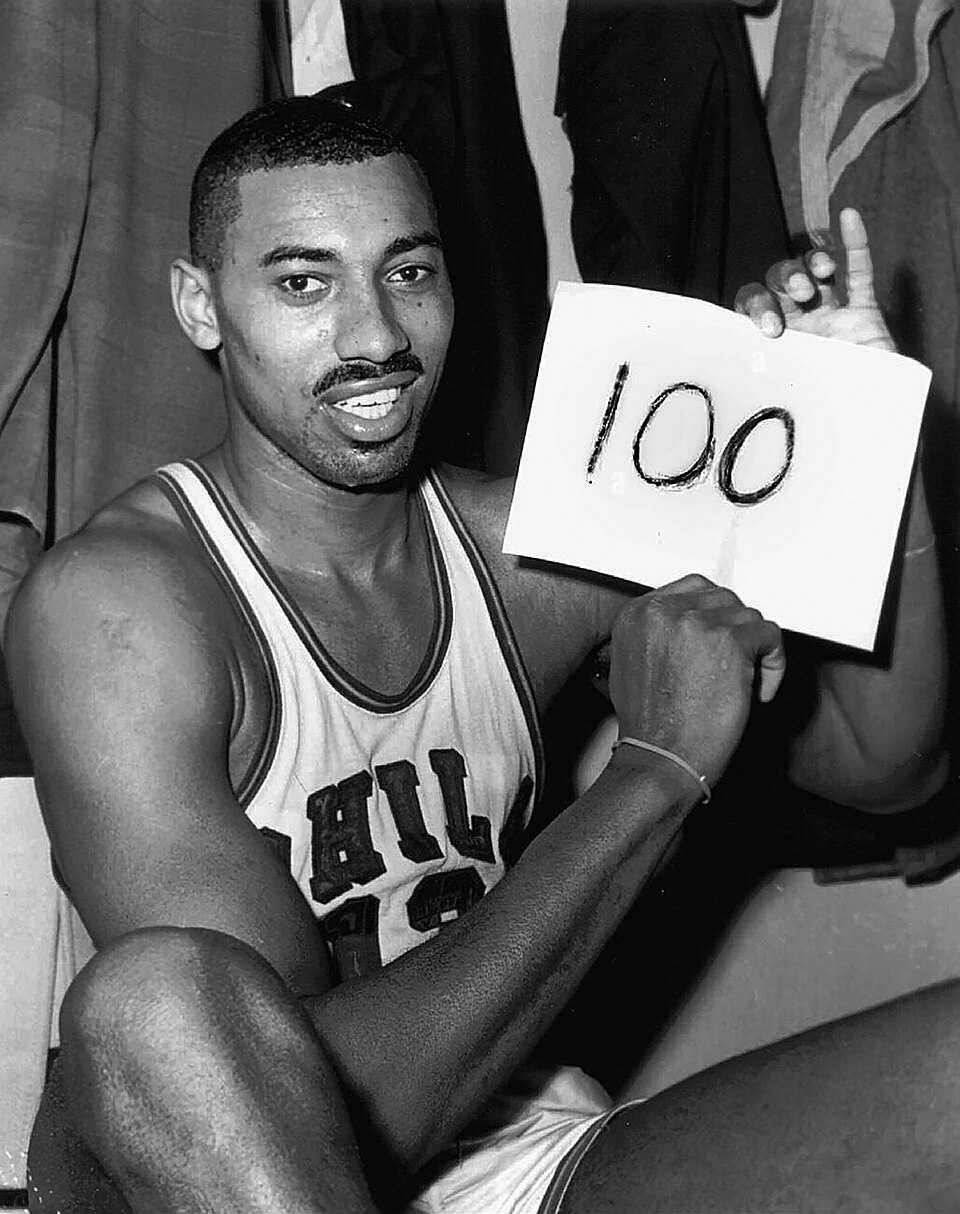
On March 2, 1962, a date etched permanently into the annals of sports history, Wilt Chamberlain achieved the seemingly impossible. Playing for the Philadelphia Warriors against the New York Knicks, Chamberlain unleashed a scoring barrage that culminated in an unprecedented 100 points in a single NBA game. This monumental feat didn't just break records; it shattered the perception of what a basketball player could accomplish, setting a benchmark that remains unchallenged over six decades later. While the legendary tales surrounding the night are plentiful, it's the sheer statistical dominance of
Wilt Chamberlain's 100 Point Game stats that truly define its magnitude and underscore his unparalleled place in basketball lore.
The Unforgettable Night: March 2, 1962
The stage for this historic performance was not a grand, bustling arena but the relatively modest Hershey Sports Arena in Hershey, Pennsylvania. The Philadelphia Warriors often played "home" games in neutral venues, and on this particular Friday night, a sparse crowd of around 4,124 witnessed history unfold. The opponent, the New York Knicks, was struggling with injuries and certainly unprepared for the onslaught that awaited them.
From the opening tip, it was clear Chamberlain was on a mission. He scored 23 points in the first quarter, followed by 18 in the second, entering halftime with a staggering 41 points. The Warriors' coaches and teammates became increasingly determined to feed him the ball, understanding that something truly special was in progress. As the game progressed, the scoring intensified, and the crowd, initially modest, grew in fervor, chanting "Give it to Wilt! Give it to Wilt!" The Knicks, in a desperate attempt to slow him down, even resorted to fouling other Warriors players to prevent Chamberlain from touching the ball, and conversely, fouling Chamberlain to send him to the free-throw line, hoping he'd miss (a historical weakness). Neither tactic worked. The Warriors ultimately won the game by a commanding score of 169-147, but the final score was merely a footnote to the individual brilliance that transcended the contest itself.
Despite the monumental nature of the event, there is no known television footage of the game, a stark reminder of how much professional basketball has changed since the early 1960s. Only radio broadcasts and photographs preserve fragments of that legendary night, lending an almost mythical quality to Wilt's achievement.
A Deep Dive into Wilt Chamberlain's 100-Point Game Stats
To truly appreciate the grandeur of Wilt's performance, one must look beyond the century mark and dissect the individual components of his statistical masterpiece. These are the core
Wilt Chamberlain 100 Point Game stats that illustrate his dominance:
- Total Points: 100 – This remains the single-game NBA scoring record, a testament to an individual performance unmatched in professional basketball history. No player has come closer than Kobe Bryant's 81-point game in 2006, highlighting the sheer difficulty of reaching Wilt's mark.
- Field Goals Made/Attempted: 36/63 (57.1%) – An incredible volume of shots, coupled with remarkable efficiency. To make 36 field goals in a game requires a blend of relentless attacking, superb post-play, and an unguardable presence in the paint. His ability to consistently convert despite being the sole focus of the Knicks' defense speaks volumes about his offensive skill.
- Free Throws Made/Attempted: 28/32 (87.5%) – Perhaps the most astonishing statistic of the night. Chamberlain was notoriously a poor free-throw shooter throughout his career, often struggling to hit 50% from the line. On this historic occasion, he transcended his weakness, sinking an incredible 87.5% of his attempts. This clutch performance from the charity stripe was absolutely crucial to reaching 100 points, demonstrating a mental fortitude that few possess. Had he shot his career average, he might not have reached the milestone.
- Total Rebounds: 25 – While often overshadowed by his scoring, Wilt’s rebounding prowess was ever-present. Grabbing 25 rebounds in the same game he scored 100 points underscores his all-around dominance as a center. He wasn't just a scorer; he was a force on the boards, controlling possessions and dictating the flow of the game.
- Total Assists: 2 – While not a high assist total, it’s important to remember his role as a center whose primary function was scoring and rebounding. Passing out of double and triple teams was part of his game, even if it didn't always translate into high assist numbers.
- Minutes Played: 48 – Chamberlain played every single minute of the game, a common occurrence for him during this era. His endurance and stamina were legendary, allowing him to maintain peak performance for the entire contest.
- Personal Fouls: 2 – For a player of his aggressive style and constant involvement in the paint, committing only two personal fouls in 48 minutes is a remarkable display of discipline and awareness, allowing him to stay on the court and continue his scoring rampage.
These definitive
Wilt Chamberlain 100 Point Game stats paint a vivid picture of a player who completely dominated every facet of the game from tip-off to the final buzzer. To learn more about how these numbers solidified his legacy, read our in-depth article:
Wilt Chamberlain's 100 Point Game: Stats That Defined a Legend.
Beyond the Box Score: The Context of a Legend's Career
Wilt Chamberlain’s 100-point game was not an isolated anomaly but rather the pinnacle of a season and career filled with mind-boggling statistics. During the 1961-62 NBA season, Chamberlain became the first player to score more than 4,000 points, finishing with an astounding 4,029 points and averaging an NBA-record 50.4 points per game—a mark that still stands today. This period saw Wilt at the absolute peak of his offensive powers, regularly putting up numbers that would be career highs for most other players.
Throughout his career, which spanned from 1959 to 1973 with the Philadelphia Warriors, San Francisco Warriors, Philadelphia 76ers, and Los Angeles Lakers, Chamberlain amassed a total of 31,419 points, a record that stood until 1984 when surpassed by Kareem Abdul-Jabbar. He also holds a career average of 30.1 points per game (a record later broken by Michael Jordan) and an incredible 22.9 rebounds per game, which remains the highest career rebounding average in NBA history. He also owns the top four single-season scoring averages in league history (50.4, 44.8, 38.3, and 37.6 PPG).
Interestingly, despite the widespread recognition of his 100-point game, Chamberlain himself often downplayed its significance, reportedly viewing his 55-rebound game against Bill Russell and the Boston Celtics as a greater personal achievement, showcasing his immense pride in his rebounding prowess. His storied rivalry with fellow center Bill Russell captivated audiences and is often credited with significantly increasing the popularity of professional basketball during their era. For a deeper dive into the historical significance and unique circumstances surrounding this unbroken record, consider reading
March 2, 1962: Inside Wilt Chamberlain's Unbroken 100-Point Record.
Why the 100-Point Game Remains Unbreakable (and What We Learn From It)
Over six decades later, Wilt Chamberlain's 100-point game remains an unbreakable record, prompting many to wonder why. Several factors contribute to its enduring singularity:
- Pace of Play: The NBA in 1962 played at an incredibly fast pace, with significantly more possessions per game compared to modern basketball. This naturally led to higher scoring opportunities for dominant players.
- Lack of the Three-Point Line: Without the three-point shot, players had to convert a higher volume of two-pointers, which generally meant more shots closer to the basket, favoring a dominant big man like Wilt. Modern players can rack up points quickly from deep, but it’s still difficult to match Wilt's sheer volume of successful field goals.
- Individual Dominance vs. Team Play: While today's NBA features incredible individual talent, the emphasis on team ball movement and balanced scoring often means no single player hogs enough possessions to even attempt 63 shots, let alone make 36.
- Wilt's Uniqueness: Chamberlain was a physical anomaly—over 7 feet tall with incredible athleticism and strength, playing in an era with fewer comparably sized and skilled defenders. His sheer talent and physical attributes were simply unmatched.
The lesson from Wilt's 100-point game is multifaceted. It highlights the importance of seizing opportunity, the power of mental toughness (especially with those free throws), and the impact one truly dominant individual can have on a game. It reminds us that while the sport evolves, certain benchmarks of individual excellence may stand forever, serving as a testament to the extraordinary capabilities of legends like Wilt Chamberlain.
In conclusion, Wilt Chamberlain's 100-point game is far more than just a number; it's a testament to unparalleled athletic dominance and an enduring symbol of what's possible in sports. The comprehensive
Wilt Chamberlain 100 Point Game stats reveal a performance of incredible skill, stamina, and mental fortitude that continues to inspire awe. It solidifies his legacy not just as one of the greatest offensive players, but as one of the most dominant athletes in the history of any sport, a legend whose records may never truly be broken.