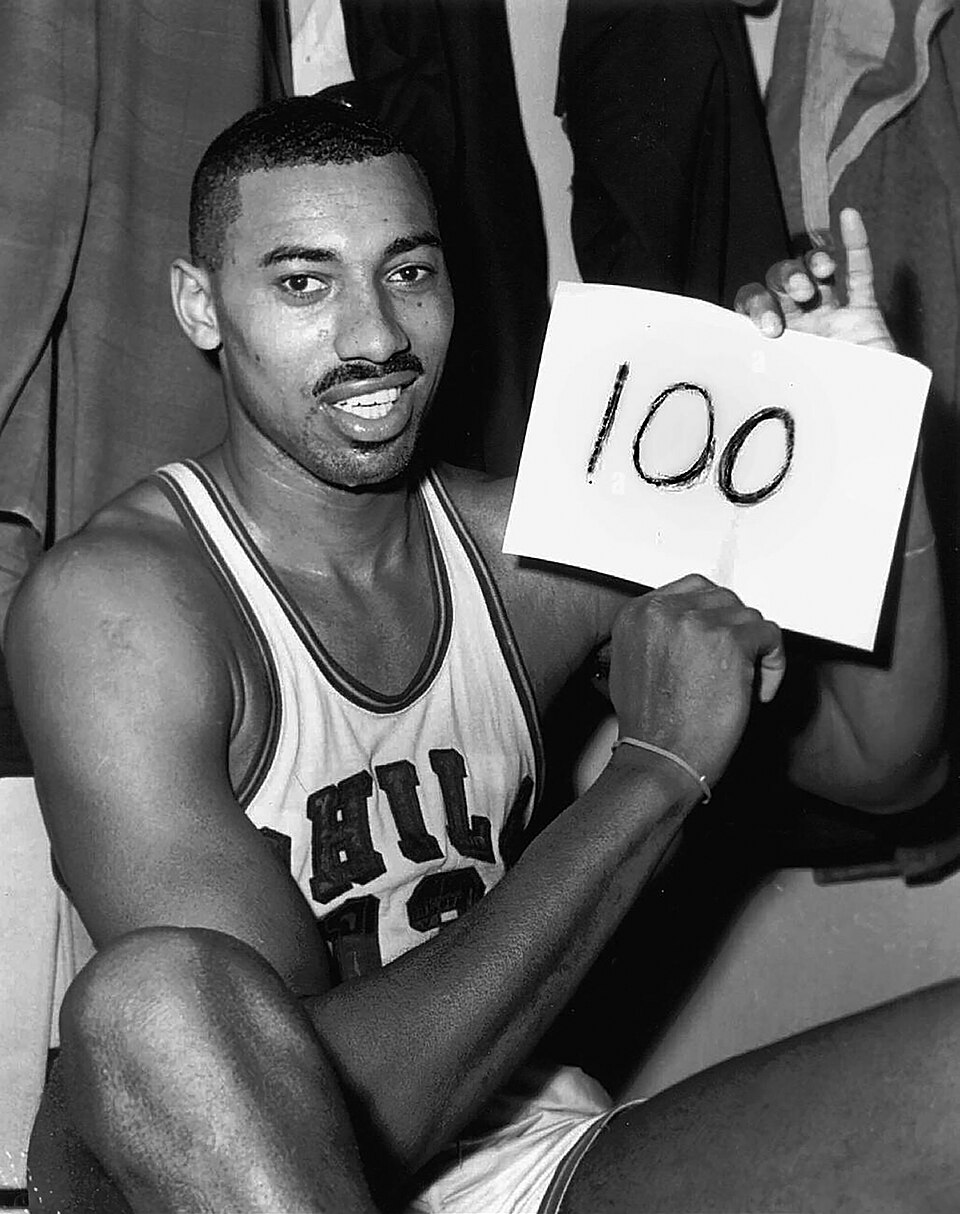
March 2, 1962: Inside Wilt Chamberlain's Unbroken 100-Point Record
On a cold night in Hershey, Pennsylvania, an event unfolded that would forever etch itself into the annals of sports history. March 2, 1962, became the date of an unparalleled individual achievement in basketball, a night when Wilt "The Stilt" Chamberlain of the Philadelphia Warriors scored an astonishing 100 points against the New York Knicks. This monumental feat didn't just break records; it set a new benchmark for scoring prowess that, over six decades later, remains untouched. The details of that legendary performance, particularly the comprehensive
Wilt Chamberlain 100 Point Game Stats, continue to fascinate fans and analysts alike, serving as a testament to one man's sheer dominance and will to win.
Chamberlain, a towering figure at over 7 feet tall, was already a force of nature in the NBA. His 1961-62 season was nothing short of historic, as he became the first player to surpass 4,000 points in a single NBA season, averaging an unheard-of 50.4 points per game. Yet, even within a season of such individual brilliance, the 100-point game stands out as the ultimate demonstration of his scoring ability and a defining moment in his illustrious career.
The Unforgettable Night in Hershey
The stage for this historic showdown was the Hershey Sports Arena, a neutral site where the Philadelphia Warriors hosted the New York Knicks. The atmosphere was reportedly electric, building steadily as Chamberlain's point total soared. By the final buzzer, the Warriors had defeated the Knicks 169-147, but the score was almost a footnote to the individual masterclass that had just transpired.
Let's dive into the core of what made this game so extraordinary – the precise
Wilt Chamberlain 100 Point Game Stats. These numbers tell a story of efficiency, endurance, and an almost superhuman effort:
- Total Points: 100
- Field Goals Made: 36
- Field Goals Attempted: 63
- Field Goal Percentage: 57.1%
- Free Throws Made: 28
- Free Throws Attempted: 32
- Free Throw Percentage: 87.5%
- Rebounds: 25
- Assists: 2
- Personal Fouls: 2
- Minutes Played: 48 (the entire game)
These statistics highlight several remarkable aspects. First, his shooting from the field was incredibly efficient given the volume of attempts. Second, and perhaps most surprisingly for a player known for his struggles at the line, Chamberlain shot an astounding 87.5% from the free-throw line. For context, Wilt's career free-throw percentage was just 51.1%, making his 28-of-32 performance against the Knicks a significant outlier and a testament to his focus and determination on that specific night. Third, he played every single minute of the game, showcasing an unmatched stamina. Beyond the scoring, his 25 rebounds demonstrated his all-around dominance on the court. For a more granular breakdown of this historic performance, consider exploring
Wilt Chamberlain's 100 Point Game: The Full Historic Stats.
One of the enduring mysteries and regrets surrounding this game is the complete lack of television footage. Only radio broadcasts and photographs survive, making the imagination work overtime to visualize the spectacle. This absence of visual record only amplifies the myth and legend surrounding one of the most iconic moments in sports.
Beyond the Box Score: Context and Impact
The 100-point game wasn't an isolated event; it was a dazzling jewel in the crown of a career filled with record-breaking achievements. Chamberlain's journey began with immense promise, pursued by over 100 colleges after his standout play at Overbrook High School in Philadelphia. He then honed his skills at the University of Kansas before joining the famed Harlem Globetrotters. His NBA career kicked off in 1959 with the Philadelphia Warriors (who later moved to become the San Francisco Warriors), followed by stints with the Philadelphia 76ers and the Los Angeles Lakers.
Throughout his career, Wilt collected an astounding array of records. He held the NBA record for career points (31,419) until Kareem Abdul-Jabbar surpassed him in 1984. His career average of 30.1 points per game was an NBA record until Michael Jordan broke it. Perhaps even more impressively, he holds the top four single-season scoring averages in league history, led by his 50.4 PPG in 1961-62, followed by 44.8 PPG (1962-63), 38.3 PPG (1960-61), and 37.6 PPG (1959-60). His career average of 22.9 rebounds per game also remains an NBA record, a statistic that underscores his all-encompassing presence on the court. To understand how these numbers fit into his broader legacy, delve into
Wilt Chamberlain's 100 Point Game: Stats That Defined a Legend.
The impact of Chamberlain's achievements, including the 100-point game, extended far beyond individual records. His good-natured but fierce rivalry with Boston Celtics legend Bill Russell captivated audiences and is often credited with significantly increasing the popularity of professional basketball in its formative years. The sheer excitement generated by games featuring these two titans drew new fans to the sport, laying groundwork for the global phenomenon the NBA is today.
Analyzing Wilt's Dominance: Why This Record Still Stands
Why has no one come close to Wilt's 100-point record, even in today's high-scoring NBA? Kobe Bryant's 81-point game in 2006 is the closest any player has come, a full 19 points shy. Several factors contribute to the seemingly unbreakable nature of this record:
- Physical Attributes and Era: Chamberlain possessed a unique combination of size, strength, and athleticism that few players in any era could match. In his era, basketball was played differently. There was no three-point line, meaning all of his 100 points came from two-point field goals and free throws. Furthermore, the game was often played at a faster pace, with more possessions per game.
- Strategic Play: As the game progressed, it became clear that Wilt was chasing 100. His teammates actively fed him the ball, creating opportunities for him to score. The Knicks, in an attempt to deny Wilt the record and conserve time, began intentionally fouling other Warriors players. However, the Warriors countered by intentionally fouling the Knicks to get the ball back to Wilt, leading to a frantic finish. This strategic maneuvering, driven by the pursuit of the record, is unlikely to be replicated today without significant pushback from the league or opposing teams.
- Free Throw Anomaly: As mentioned, Wilt's free throw performance was crucial. Without his exceptional night at the line, reaching 100 points would have been far more difficult, if not impossible.
- Will and Opportunity: It took an extraordinary confluence of individual determination, team support, and game circumstances for Wilt to achieve this. Such a perfect storm is rare. While today's players are incredibly skilled, the modern game emphasizes team play and efficiency, making individual scoring sprees of this magnitude harder to maintain without significant changes in team strategy.
For any player today aiming for such a record, a practical tip would be to focus not just on scoring, but also on efficiency, especially from the free-throw line, and to ensure their team's buy-in. It highlights the strategic depth required, even in what appears to be a purely individual performance.
A Legend's Perspective and Lasting Legacy
Interestingly, despite the universal acclaim for his 100-point game, Chamberlain himself often downplayed its significance compared to other achievements. He reportedly considered his 55-rebound game against Bill Russell and the Celtics a greater personal accomplishment, perhaps valuing the all-around contribution and direct rivalry more. This perspective offers valuable insight into the mindset of a true competitor who saw beyond mere points.
Wilt Chamberlain passed away on October 12, 1999, but his legacy continues to inspire. He was not just a scorer but a dominant rebounder and a key figure in elevating the professional basketball game. The 100-point game solidified his legendary status, transforming him from a great player into an enduring icon. It created a permanent benchmark, a seemingly unreachable summit that defines individual brilliance in basketball.
Conclusion
The March 2, 1962 game was more than just a regular-season contest; it was a singular moment in sports history, defined by the unprecedented
Wilt Chamberlain 100 Point Game Stats. It showcased an individual talent operating at a level perhaps never seen before or since. The enduring nature of this record, the mythical quality imparted by the lack of footage, and the sheer audacity of the achievement ensure that Wilt Chamberlain's 100-point game remains one of the NBA's most celebrated and discussed feats. It stands as a timeless reminder of what is possible when immense talent, relentless determination, and unique circumstances converge, cementing Wilt Chamberlain's place as one of the greatest and most dominant players to ever grace the hardwood.